In-Water Condition Survey: What Gets Inspected
An in-water condition survey assesses the structural and mechanical health of a vessel's underwater components while it remains afloat — no dry docking required. It is used for routine condition monitoring, pre-purchase inspections, class compliance checks, and identifying issues before they escalate into costly repairs. Here is what the survey covers.
Hull Condition
Divers conduct a full visual sweep of the hull plating using high-resolution underwater cameras and CCTV equipment, checking for corrosion, pitting, dents, cracks, and coating breakdown. Hull paint samples are collected where coating deterioration is identified for laboratory analysis to determine remaining coating life. Underwater photo and video documentation is produced for every survey, providing a timestamped record of hull condition for owners, operators, and class surveyors.
Propeller and Shaft
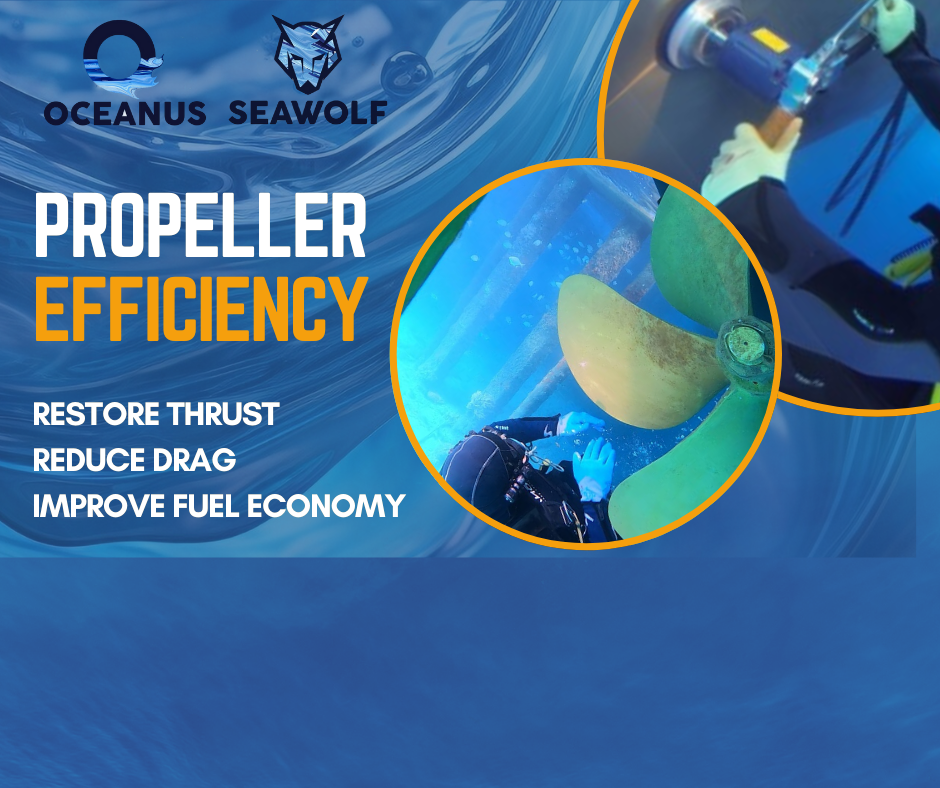
The propeller is inspected for blade edge damage, cavitation erosion, surface fouling, and deformation. Shaft seal condition and rope guard integrity are assessed. Where damage is identified, findings are documented and — if required — immediate propeller shaping and grinding or entanglement removal can be carried out within the same dive.
Rudder and Steering Gear
The rudder is checked for structural damage, coating condition, and bearing wear. Rudder pintle clearance readings are taken to measure bearing wear against manufacturer tolerances — a key indicator of steering system health that is required by many class societies at defined intervals. Rudder pintles and gudgeons are also visually inspected for corrosion and alignment.
Anodes and Corrosion Protection
All sacrificial zinc or aluminium anodes on the hull, shaft, rudder, and appendages are assessed for remaining material. Depleted anodes are flagged for immediate underwater replacement. Signs of stray current corrosion — accelerated pitting on hull plating or propeller blades — are noted and reported separately.
Sea Chests and Niche Areas
Sea chest grating and interior inspection confirms that cooling water inlets are clear of fouling and structural damage. Thruster tunnels, shaft brackets, bow and stern appendages, and keel areas are individually inspected — the niche areas most commonly missed in routine surveys and most scrutinised during NZ MPI and Australia ABFMR-CV compliance inspections.
📋 All survey findings are compiled into a written condition report with photographic evidence — accepted by major classification societies as supporting documentation for underwater inspection in place of dry dock (UWILD).
📞 Contact Oceanus Marine to schedule an in-water condition survey for your vessel in Singapore.
.png)
.png)
.png)