Maintaining Propeller Efficiency in Today’s Operating Environment
Propeller surface polishing has become a growing concern for vessel operators in Singapore as fuel prices rise and environmental regulations tighten. While hull fouling often receives most of the attention, the propeller is frequently overlooked — despite being one of the most critical components affecting vessel efficiency.
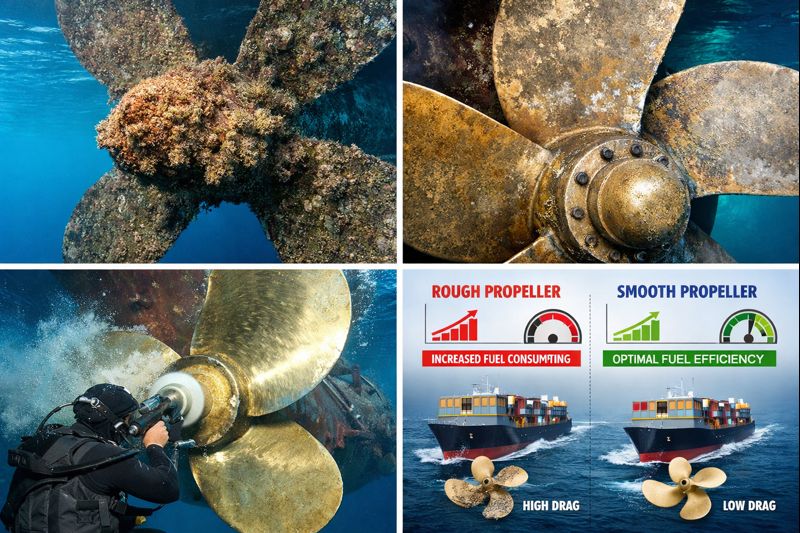
In recent inspections, many vessels show signs of rough propeller surfaces caused by marine growth, micro-corrosion, and coating deterioration. These surface irregularities increase drag, forcing engines to work harder and consume more fuel. Even minor surface damage can result in measurable performance losses over time.
Common Problems Seen on Vessel Propellers
One of the most common issues is the accumulation of slime layers and calcareous growth around blade edges and hubs. Unlike heavy hull fouling, these deposits are harder to detect visually from above water but can significantly disturb water flow across the propeller surface.
Another frequent problem is surface pitting caused by electrochemical reactions and prolonged exposure to seawater. These microscopic pits increase surface roughness and create turbulence during rotation. Over time, this not only reduces propulsion efficiency but may also accelerate material fatigue.
Why Propeller Condition Matters More Than Ever
Modern vessels are designed for hydrodynamic efficiency, meaning even small deviations from a smooth propeller profile can affect overall performance. As shipping companies aim to reduce carbon emissions and meet stricter fuel consumption targets, propeller condition has become a practical operational issue rather than just a maintenance task.
Rough propellers also contribute to vibration and noise, which can lead to increased wear on bearings and shafts. In some cases, operators only notice these symptoms after fuel consumption has already increased noticeably.
Challenges with Traditional Maintenance Approaches
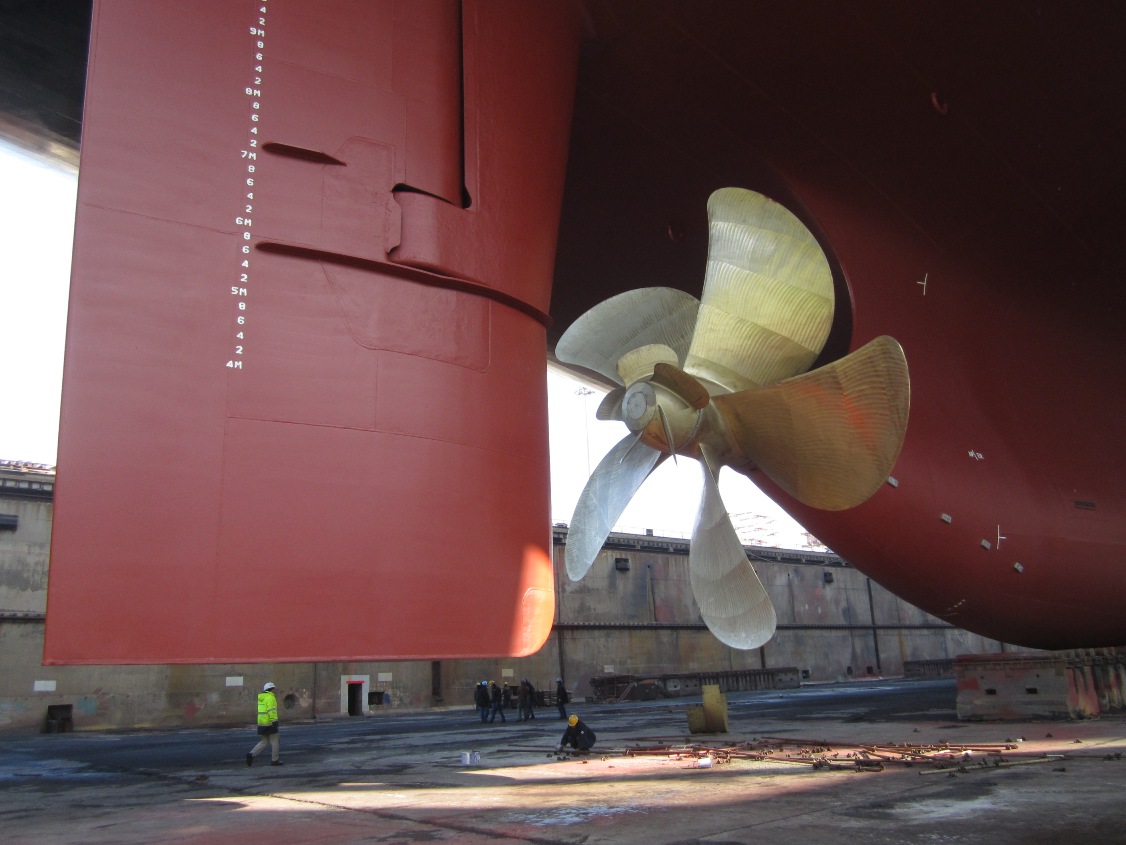
Dry docking remains an effective method for full propeller restoration, but it is costly and disrupts vessel schedules. As a result, many vessels continue operating with suboptimal propeller surfaces until performance drops significantly.
Diver-based cleaning is often used as a temporary solution, but results can vary depending on visibility, access, and working conditions. In busy ports like Singapore, underwater conditions frequently limit the precision of manual polishing.
Current Direction of In-Water Propeller Polishing
In-water propeller polishing has evolved into a targeted maintenance activity rather than a reactive repair measure. Operators are increasingly scheduling polishing as part of regular underwater inspections to maintain smooth blade surfaces and stable propulsion performance.
This approach allows potential surface issues to be corrected early, before they develop into larger mechanical or efficiency-related problems. It also reduces the risk of long-term coating damage and metal degradation.
Operational Impact
From an operational standpoint, smoother propeller surfaces translate into more predictable engine loads and reduced fuel penalties. Over extended voyages, even small efficiency gains can lead to meaningful cost savings and improved voyage planning accuracy.
For vessels operating in warm tropical waters, where fouling develops rapidly, maintaining propeller condition has become an ongoing challenge rather than a once-a-year maintenance event.
As regulatory pressure and operating costs continue to rise, attention is gradually shifting toward underwater components that directly influence propulsion performance — placing propeller surface condition at the center of modern maintenance strategies.
📞 Contact Us to discuss in-water propeller inspection and polishing services in Singapore.